The Science of a Solar Eclipse
A total solar eclipse is a breathtaking coincidence of cosmic proportions. The Sun is approximately 400 times wider than the Moon, but it is also remarkably close to being 400 times farther away from Earth. This unique geometry allows the much smaller Moon to perfectly cover the solar disk from our perspective.
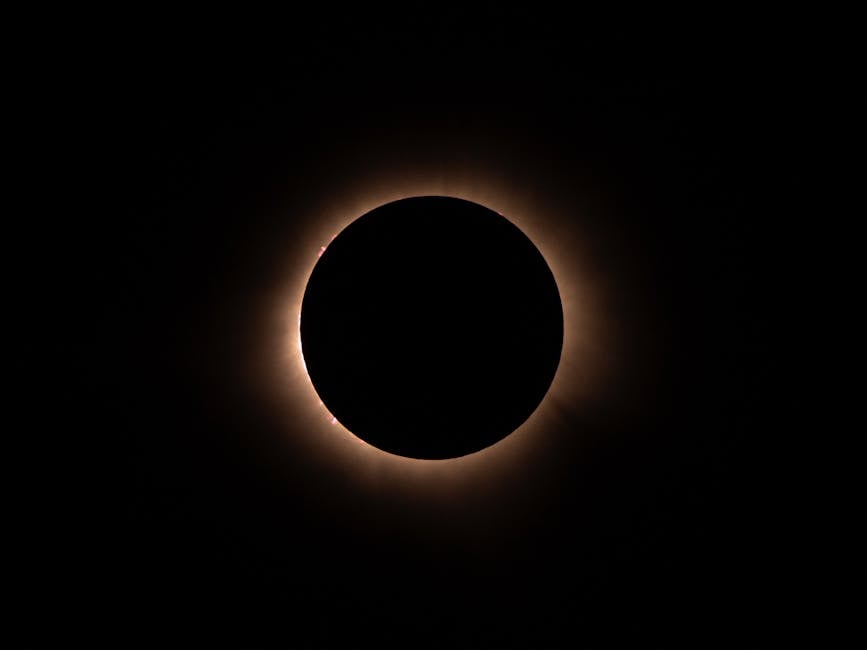
Key Eclipse Phenomena
Umbra and Penumbra
The umbra is the dark inner shadow where the Sun is completely obscured (totality). The penumbra is the lighter outer shadow causing a partial eclipse.
Baily's Beads & Diamond Ring
Just before totality, sunlight shines through the rugged lunar valleys, creating glowing spots called Baily's beads. The last brilliant flash of light before totality is the famous Diamond Ring effect.
The Solar Corona
Only visible during totality, the corona is the Sun's outer atmosphere. It consists of superheated plasma that forms beautiful, wispy streamers extending millions of miles into space.
Safety Guidelines
How to Safely View an Eclipse
Looking directly at the Sun without proper protection can cause permanent eye damage or blindness.
- Always use certified eclipse glasses meeting the ISO 12312-2 international standard during partial phases.
- Never use standard sunglasses, unfiltered cameras, telescopes, or binoculars to look at the Sun.
- Totality is the only safe time to view the eclipse with the naked eye. The moment the Sun begins to reappear, put your glasses back on immediately.
- Pinhole projectors are a safe, indirect way to project the image of the partial eclipse onto a surface.